
Logan, WV
Logan is known for its short, but wet winters and the summers can be quite rainy. Receiving about 47 inches of rain per year, Logan’s wet soil can cause problems for your foundation.
Schedule Free InspectionBasement Waterproofing and Crawl Space Encapsulation in Logan, WV
Since rainfall is so prevalent in Logan, basements and crawl spaces are put at risk for moisture-related damage. Starting with basements, moisture from rain slowly drains below the ground. Basement walls are located below the surface, so the draining water eventually puts pressure on basement walls as it drains right next to them. Over time, this pressure causes basement walls to bow and crack –providing an entrance for groundwater to leak inside your basement and cause problems such as mold, musty odors, and efflorescence.
Meanwhile, crawl spaces experience a different problem. While groundwater from rain does drain into the soil below your crawl space, it isn’t always the growing pressure that causes damage or excess moisture. Instead, some groundwater evaporates into your crawl space, becoming trapped and absorbed by the wooden support beams holding up your home. Water vapor can also get into your home through open crawl space vents. Either way, excess moisture leads to wood rot, condensation, and mold.
Our solutions to these problems are basement waterproofing and crawl space encapsulation respectively. Both solutions involve vapor barriers, dehumidifiers, sump pumps, and more to keep moisture out of these important areas. Don’t let Logan’s regular rains or cloudy conditions cause issues for your basement or crawl space anymore with our solutions!
Foundation Repair in Logan, WV
Your foundation supports everything in your home from floors, to furniture, to people. When your foundation gets damaged, your entire home is put at risk. Foundation damage occurs when soil breaks down. Logan’s soil contains sandy loam and is quite stony. Often, the soil becomes weak due to certain weather conditions such as rain or drought. In Logan, homeowners should look out for soil washout –the process by which rainfall washes away soil particles and causes the soil below your foundation to become weak. As the moisture permeates the soil, it becomes soft, muddy, and unable to support the weight of your home.
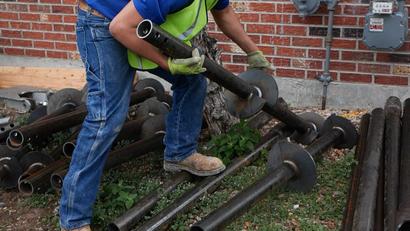
Since Logan receives an average of 47 inches of annual rain (almost 10 inches more than the national average), our foundation repair solutions are beneficial for any homeowner in the area. At Basement Authority of West Virginia, we use pier systems, wall anchors, carbon fiber reinforcements, and more to keep your foundation safe. We have repair options for basements, crawl spaces, and concrete slabs that guarantee a permanent fix to foundation problem signs such as uneven floors, settlement, or a leaning chimney.
Concrete Lifting in Logan, WV
Moisture causes damage to more than just your foundation. Concrete also relies on sturdy soil to stay supported. Many concrete structures are used by Logan homeowners such as driveways, sidewalks, or steps. When the area’s sandy loam and stony soils experience moisture-related issues, concrete problem signs emerge. Homeowners in Logan should keep in mind that the area’s freezing, wet winters also put concrete at risk. When moisture collects below the soil and then freezes due to cold temperatures, it actually expands in size. This process causes frozen water and soil to push upon concrete structures.
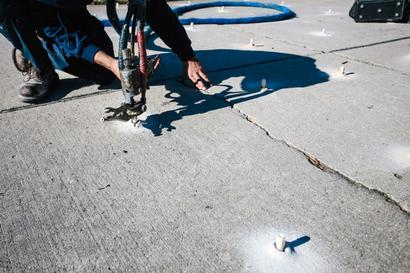
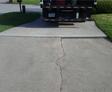
Whether rain or snow damages your concrete, here’s what to look out for: cracked concrete, unlevel steps, and an uneven driveway all indicate concrete damage. Homeowners rely on these structures for their daily routines, often walking or driving over them. Any damage to them becomes a hazard for injury. Thankfully, our expert team at Basement Authority of West Virginia has concrete lifting solutions for residents in Logan. We use PolyRenewal™, a polyurethane injection system that is installed below concrete before expanding and hardening within 15 minutes. That means that on the same day as installation, your concrete is lifted back into place, and you can get back to your regular routine.
FAQs
Due to the moist and often humid climate in and around Logan, especially during the summer months, wood rot is a very prevalent problem. There are three types of wood rot that could impact your home, but they all have the same effect: they weaken the structural stability of the surfaces in which they live. Wood rot aids in the decay of decaying wood, which is a required and beneficial function. In a home, however, where all of the wood is dead, wood rot is a huge and dangerous problem that can cause a slew of problems throughout the structure.
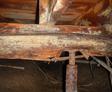
Soft rot, white rot, and brown rot are the three main types of wood rot. Each of these types of rot weakens wood and causes it to break down over time, but they manifest themselves in different ways and advance at different speeds. Wet rots, such as soft rot and white rot, are commonly lumped together under the term “wet rot” since they require more moisture to thrive. Soft rot moves more slowly than brown and white rot, yet it can live in temperatures that brown and white rot cannot. As the cellulose in the wood breaks down, it can give it a honeycomb look and a soft, spongy texture.
White rot, on the other hand, affects both the lignin and the cellulose that make up wood, leaving only the cellulose. This can turn the wood yellow or white (thus the name) and give it a stringy or mushy texture, often with a slimy feel to it. Brown rot, on the other hand, is also known as dry rot and is the fastest moving of all the varieties. The damaged wood has a brittle texture and has a dark brown, broken appearance (almost as if it has been burned). If you notice any of these indicators, it’s time to seek professional help.
Moisture can have a lot more of an influence on your foundation than the average Logan homeowner realizes. All of the water from heavy rain and melted snow, for example, will soak into the soil. The soil, on the other hand, can only hold so much water before it either washes away or becomes incredibly heavy. This can put a tremendous amount of strain on your foundation, forcing it to shift away from the weight or possibly crack
This phenomenon is known as hydrostatic pressure. Hydrostatic pressure can also be expressed in other ways. Water can readily get trapped in the pores of a concrete foundation. When winter arrives and the trapped water freezes, the growing ice can cause the foundation to crack from the inside out.
You’ll also have to deal with the clay bowl effect, which is a typical building phenomenon that causes settling problems. When constructing a home, contractors will dig a big hole into which they will lay the foundation (as well as a basement or crawl space). Following the installation of these components, there is usually some space around the perimeter that the contractors will backfill with the earth they dug out. Of course, it’s a lot looser now than it was before, and the area’s silty loam soil is already rather loose. The soil forms a bowl around the foundation that is readily swept away following a major storm or when the snow melts in the spring. Your foundation will begin to shift or settle into the remaining soil without this critical support, and it may even crack. Basement Authority of West Virginia can prevent this from happening by waterproofing the foundation.
The crawl space of a house is one of its most vulnerable regions. This is due to its location at the bottom of the house, as well as the fact that many crawl spaces in Logan were not meant to be completely watertight. This is a particularly serious issue in older homes. Crawl space vents, for example, were commonly installed in homes built between the 1950s and 1990s to promote airflow. At the time, this was thought to be the finest method for reducing wetness and humidity, but it has subsequently been discovered that it actually increases humidity.
One of the most efficient ways to protect your home from dampness and humidity is to waterproof it. Waterproofing also has a number of other advantages that you should think about. Waterproofing, for example, improves your property’s heat and cold retention qualities while also ensuring a somewhat steady interior climate. Similarly, the lower humidity that this technique allows for will make your home more energy-efficient. Your HVAC system will have an easier time processing arid air than humid air. As a result, a low-humidity home will consume less energy since your HVAC system will be able to provide greater outcomes with less effort. This also reduces the amount of wear and tear on your HVAC units.
Thankfully, waterproofing is a simple and quick operation that can be completed by a professional. In general, this will entail installing crawl space vent covers, insulation, vapor barriers, and possibly even an interior drainage system and a sump pump system. If you still have dampness and humidity issues, professionals may recommend installing a dehumidifier system in your crawl space to remove gaseous moisture and reduce humidity levels in a more direct and immediate manner. This has the added benefit of making your home more comfortable.
Foundation settling is frequently discovered after the house has begun to break apart. You must act quickly if you’ve noticed the warning signals and determined that your Logan home’s foundation is deteriorating. Settling only becomes worse with time, so what you’re witnessing now will become more of a problem in the future. If this is allowed to continue for too long, the house may become too unsafe to live in. Call our local foundation repair specialists before that happens.
Foundation issues, unlike a paint job or hanging a painting, are not something you can do yourself. Professional solutions are necessary to do the project correctly. Basement Authority of West Virginia offers helical piers and push piers as well as other foundation repair choices for Logan residents. These pier support systems will entirely stop the settling and permanently stabilize your foundation. The piers may even be able to elevate your house and level it out.
After the repairs are completed, you can address any damage caused by the foundation settling. If any of your door or window frames are warped, you should get them replaced. If there are any cracks in the walls, have them repaired. Repairing your home when it’s settling isn’t worth it because anything that isn’t a support pier won’t stop the damage caused by settling. Consider waterproofing your foundation if you haven’t previously, as sinking could be caused by an issue with foundation drainage.
PolyRenewal™ provides a number of advantages over other concrete lifting processes. Traditional concrete lifting solutions are inferior in terms of installation method, installation time, material used, and long-term effects. The cement slurry used in mudjacking, for example, takes 24 to 48 hours to cure, which is inconvenient if the settling occurred in your driveway. Polyurethane foam cures in 15 to 30 minutes and may be injected beneath the slab at the same time, making it one of the quickest solutions to fix a settled slab.
Don’t be concerned about your slab settling anymore. PolyRenewal™ is a long-term concrete lifting solution. Polyurethane does not corrode or wash away, and it is not affected by the freeze-thaw cycle. Polyurethane is a polymer and urethane-based synthetic substance. The mudjacking cement, on the other hand, is porous and has little tensile strength, so it cracks after a few winters.
In a city like Logan, PolyRenewal™ is one of the greatest concrete lifting processes. Because the soil in this area tends to settle, any additional weight will cause it to settle even more. Polyurethane is a strong material that is also lightweight. Polyurethane can expand and cure under the slab without disturbing the soil because it weighs just 4 to 6 pounds per cubic foot. With PolyRenewal™, your slab is not only solid and secure, but it is also future-proofed against further settling.
A sump pump is the most vital component in a basement. Flooding would be an all-too-common event for many homeowners if it weren’t for it. However, in Logan, where flooding isn’t out of the question because of frequent precipitation, some basements encounter water that is simply too much for the usual sump pump. Even while a competent sump pump can keep things dry on its own, it’s still necessary to be mindful of the state of your basement.
Even if you have a sump pump, your basement can still flood. The most typical issue with sump pumps is that they break down in the middle of a storm when there is still water coming in. Water rushes in faster than the sump pump can drain it out on occasion. Because most sump pumps fail without warning, homeowners aren’t aware that something is wrong until they notice water in their basement. This is why a sump pump with a battery backup is recommended.
The sump pumps our team at Basement Authority of West Virginia installs can be equipped with a battery backup that will alert you if the primary pump fails. It also warns you when the water level in the basin rises too high, indicating that it is about to overflow. These features are an excellent method to alert homeowners to the possibility of a sump pump malfunction. You may minimize the damage to your foundation by remaining one step ahead of the approaching water and then taking the required procedures to get your sump pump working correctly again by staying one step ahead of the incoming water.

Our Locations
132 Rocky Step Rd.,
Scott Depot, WV 25560